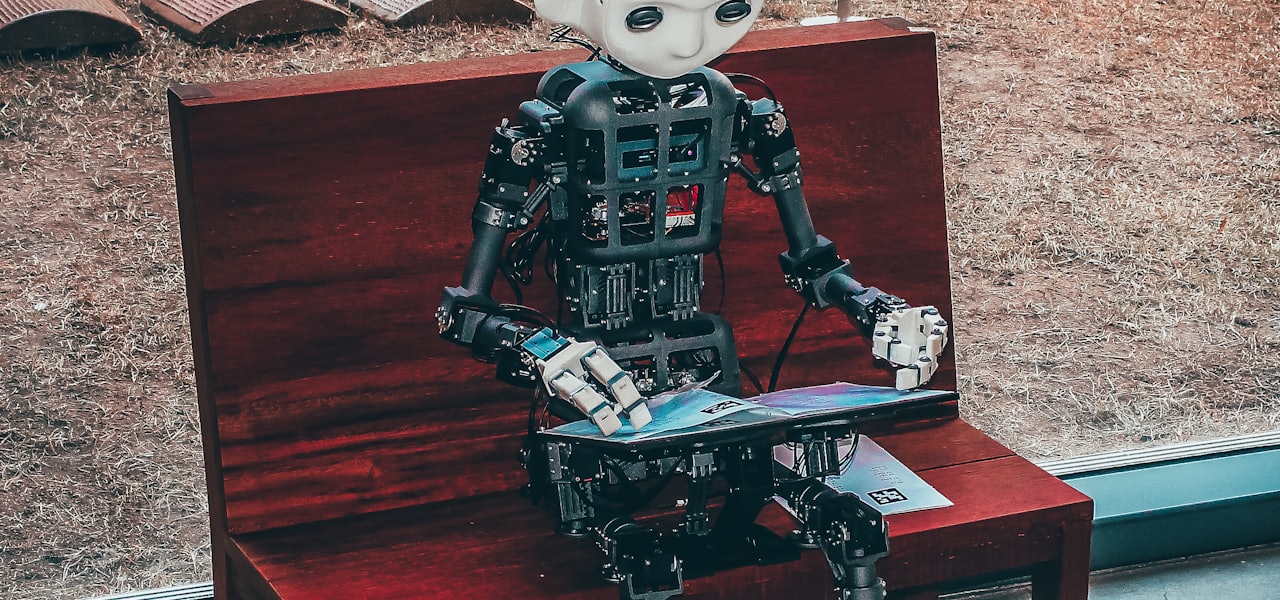
A social bot, refers to fully or partially automated social media accounts designed to perform most regular users’ actions, such as liking, posting content, and chatting with other users. Although their levels of autonomy vary, and often include a human-in-the-loop, social bots can use artificial intelligence to perform social media actions and can use large language models to mimic human dialogue. Social bots can operate alone or in groups that coordinate messaging as part of a network of coordinated inauthentic behavior. Social bots are often used to perform ad fraud by artificially boosting viewership and engagement metrics and to spread disinformation on social media. == Uses == Social bots are used for a large number of purposes on a variety of social media platforms, including Twitter, Instagram, Facebook, and YouTube. One common use of social bots is to inflate a social media user's apparent popularity, usually by artificially manipulating their engagement metrics with large volumes of fake likes, reposts, or replies. Social bots can similarly be used to artificially inflate a user's follower count with fake followers, creating a false perception of a larger and more influential online following than is the case. The use of social bots to create the impression of a large social media influence allows individuals, brands, and organizations to attract a higher number of human followers and boost their online presence. Fake engagement can be bought and sold in the black market of social media engagement. Corporations typically use automated customer service agents on social media to affordably manage high levels of support requests. Social bots are used to send automated responses to users’ questions, sometimes prompting the user to private message the support account with additional information. The increased use of automated support bots and virtual assistants has led to some companies laying off customer-service staff. Social bots are also often used to influence public opinion. Autonomous bot accounts can flood social media with large numbers of posts expressing support for certain products, companies, or political campaigns, creating the impression of organic grassroots support. This can create a false perception of the number of people who support a certain position, which may also have effects on the direction of stock prices or on elections. Messages with similar content can also influence fads or trends. Many social bots are also used to amplify phishing attacks. These malicious bots are used to trick a social media user into giving up their passwords or other personal data. This is usually accomplished by posting links claiming to direct users to news articles that would in actuality direct to malicious websites containing malware. Scammers often use URL shortening services such as TinyURL and bit.ly to disguise a link's domain address, increasing the likelihood of a user clicking the malicious link. The presence of fake social media followers and high levels of engagement help convince the victim that the scammer is in fact a trusted user. Social bots can be a tool for computational propaganda. Bots can also be used for algorithmic curation, algorithmic radicalization, and/or influence-for-hire, a term that refers to the selling of an account on social media platforms. == History == Bots have coexisted with computer technology since the earliest days of computing. Social bots have their roots in the 1950s with Alan Turing, whose work focused on machine intelligence with the development of the Turing Test. The following decades saw further progress made towards the goal of creating programs capable of mimicking human behavior, notably with Joseph Weizenbaum’s creation of ELIZA. Considered to be one of the first Chatbots, ELIZA could simulate natural conversations with human users through pattern matching. Its most famous script was DOCTOR, a simulation of a Rogerian psychotherapist that was programmed to chat with patients and respond to questions. With the growth of social media platforms in the early 2000s, these bots could be used to interact with much larger user groups in an inconspicuous manner. Early instances of autonomous agents on social media could be found on sites like MySpace, with social bots being used by marketing firms to inflate activity on a user’s page in an effort to make them appear more popular. Social bots have been observed on a large variety of social media websites, with Twitter being one of the most widely observed examples. The creation of Twitter bots is generally against the site’s terms of service when used to post spam or to automatically like and follow other users, but some degree of automation using Twitter’s API may be permitted if used for “entertainment, informational, or novelty purposes.” Other platforms such as Reddit and Discord also allow for the use of social bots as long as they are not used to violate policies regarding harmful content and abusive behavior. Social media platforms have developed their own automated tools to filter out messages that come from bots, although they cannot detect all bot messages. == Legal regulation == Due to the difficulty of recognizing social bots and separating them from "eligible" automation via social media APIs, it is unclear how legal regulation can be enforced. Social bots are expected to play a role in shaping public opinion by autonomously acting as influencers. Some social bots have been used to rapidly spread misinformation, manipulate stock markets, influence opinion on companies and brands, promote political campaigns, and engage in malicious phishing campaigns. In the United States, some states have started to implement legislation in an attempt to regulate the use of social bots. In 2019, California passed the Bolstering Online Transparency Act (the B.O.T. Act) to make it unlawful to use automated software to appear indistinguishable from humans for the purpose of influencing a social media user's purchasing and voting decisions. Other states such as Utah and Colorado have passed similar bills to restrict the use of social bots. The Artificial Intelligence Act (AI Act) in the European Union is the first comprehensive law governing the use of Artificial Intelligence. The law requires transparency in AI to prevent users from being tricked into believing they are communicating with another human. AI-generated content on social media must be clearly marked as such, preventing social bots from using AI in a manner that mimics human behavior. == Detection == The first generation of bots could sometimes be distinguished from real users by their often superhuman capacities to post messages. Later developments have succeeded in imprinting more "human" activity and behavioral patterns in the agent. With enough bots, it might be even possible to achieve artificial social proof. To unambiguously detect social bots as what they are, a variety of criteria must be applied together using pattern detection techniques, some of which are: cartoon figures as user pictures sometimes also random real user pictures are captured (identity fraud) reposting rate temporal patterns sentiment expression followers-to-friends ratio length of user names variability in (re)posted messages engagement rate (like/followers rate) analysis of the time series of social media posts Social bots are always becoming increasingly difficult to detect and understand. The bots' human-like behavior, ever-changing behavior of the bots, and the sheer volume of bots covering every platform may have been a factor in the challenges of removing them. Social media sites, like Twitter, are among the most affected, with CNBC reporting up to 48 million of the 319 million users (roughly 15%) were bots in 2017. Botometer (formerly BotOrNot) is a public Web service that checks the activity of a Twitter account and gives it a score based on how likely the account is to be a bot. The system leverages over a thousand features. An active method for detecting early spam bots was to set up honeypot accounts that post nonsensical content, which may get reposted (retweeted) by the bots. However, bots evolve quickly, and detection methods have to be updated constantly, because otherwise they may get useless after a few years. One method is the use of Benford's Law for predicting the frequency distribution of significant leading digits to detect malicious bots online. This study was first introduced at the University of Pretoria in 2020. Another method is artificial-intelligence-driven detection. Some of the sub-categories of this type of detection would be active learning loop flow, feature engineering, unsupervised learning, supervised learning, and correlation discovery. Some operations of bots work together in a synchronized way. For example, ISIS used Twitter to amplify its Islamic content by numerous orchestrated accounts which further pushed an item to the Hot List news, thus further a
AstroPay
AstroPay is a global digital wallet that provides users with a way to pay, send, and receive money. The app provides online payments, virtual and physical debit cards, peer-to-peer money transfers, and more. == History == AstroPay was founded in Uruguay in 2009 as a payment processing company. Over time, it expanded its services across Latin America, EMEA, and APAC. A significant milestone occurred in 2016, when AstroPay spun off dLocal, focusing on cross-border payments for emerging markets. dLocal became Uruguay's first unicorn and eventually went public through a successful IPO. In 2020, AstroPay spun off its payment processing services into a new entity, D24, to focus on mobile wallet for cross border. Between 2023 and 2024 the Company brought new leadership to guide its transition towards becoming a fully focused global digital multicurrency wallet where users save, send, and spend globally. This shift introduced enhanced features, including loyalty prepaid cards and multicurrency accounts. == Services == AstroPay offers three main products: AstroPay Wallet, AstroPay check-out, and AstroPay Platform. AstroPay Wallet is a digital wallet for consumers, where they have multicurrency accounts, prepaid card and marketplace. With AstroPay check-out, businesses can tap into AstroPay's wallet user base by accepting AstroPay as a payment method in their check-out options. Lastly, AstroPay Platform enables other businesses to use the AstroPay network to launch their own global wallet. == Brand endorsements, partnerships == AstroPay's marketing strategy has included the development of co-branded products with sports teams and other brand. The company sponsored Burnley Football Club during the 2018–19 Premier League season, renewing the partnership for the 2021–22 Premier League season when it became the club's official payment service partner. In August 2021, AstroPay entered into a partnership with the Wolverhampton Wanderers for the 2021-22 Premier League season, and the following year, became the team's shirt sponsor. Later, in September 2021, AstroPay expanded its partnership with Wolverhampton Wanderers, which included becoming the team's official payment partner and later, in 2023, co-launching a co-branded card. Other partnerships include Newcastle United in 2021 in the English Premier League. AstroPay made arrangements to ensure that branding and logo would be visible on the pitch-side LED advertising during Premier League matches. Furthermore, in June 2022, the company renewed it's partnership with Wolverhampton Wanderers for the 2022-23 Premier League season and launched its Wolves debit card in February 2023. Some other notable partnerships include: Universidad de Chile in 2024, Tottenham Hotspurs in 2023-25, and even a collaboration with Lionel Messi across all of Latin America. == Recent developments == AstroPay has refocused its strategy since 2023, pivoting from payment processing to concentrate on its global digital wallet. This move reflects a broader effort to redefine the company's market positioning by emphasizing global user-friendly financial services, while separating its identity from previous operations managed by dLocal and D24.
Sum of absolute differences
In digital image processing, the sum of absolute differences (SAD) is a measure of the similarity between image blocks. It is calculated by taking the absolute difference between each pixel in the original block and the corresponding pixel in the block being used for comparison. These differences are summed to create a simple metric of block similarity, the L1 norm of the difference image or Manhattan distance between two image blocks. The sum of absolute differences may be used for a variety of purposes, such as object recognition, the generation of disparity maps for stereo images, and motion estimation for video compression. == Example == This example uses the sum of absolute differences to identify which part of a search image is most similar to a template image. In this example, the template image is 3 by 3 pixels in size, while the search image is 3 by 5 pixels in size. Each pixel is represented by a single integer from 0 to 9. Template Search image 2 5 5 2 7 5 8 6 4 0 7 1 7 4 2 7 7 5 9 8 4 6 8 5 There are exactly three unique locations within the search image where the template may fit: the left side of the image, the center of the image, and the right side of the image. To calculate the SAD values, the absolute value of the difference between each corresponding pair of pixels is used: the difference between 2 and 2 is 0, 4 and 1 is 3, 7 and 8 is 1, and so forth. Calculating the values of the absolute differences for each pixel, for the three possible template locations, gives the following: Left Center Right 0 2 0 5 0 3 3 3 1 3 7 3 3 4 5 0 2 0 1 1 3 3 1 1 1 3 4 For each of these three image patches, the 9 absolute differences are added together, giving SAD values of 20, 25, and 17, respectively. From these SAD values, it could be asserted that the right side of the search image is the most similar to the template image, because it has the lowest sum of absolute differences as compared to the other two locations. == Comparison to other metrics == === Object recognition === The sum of absolute differences provides a simple way to automate the searching for objects inside an image, but may be unreliable due to the effects of contextual factors such as changes in lighting, color, viewing direction, size, or shape. The SAD may be used in conjunction with other object recognition methods, such as edge detection, to improve the reliability of results. === Video compression === SAD is an extremely fast metric due to its simplicity; it is effectively the simplest possible metric that takes into account every pixel in a block. Therefore, it is very effective for a wide motion search of many different blocks. SAD is also easily parallelizable since it analyzes each pixel separately, making it easily implementable with such instructions as ARM NEON or x86 SSE2. For example, SSE has packed sum of absolute differences instruction (PSADBW) specifically for this purpose. Once candidate blocks are found, the final refinement of the motion estimation process is often done with other slower but more accurate metrics, which better take into account human perception. These include the sum of absolute transformed differences (SATD), the sum of squared differences (SSD), and rate–distortion optimization.
Ho–Kashyap algorithm
The Ho–Kashyap algorithm is an iterative method in machine learning for finding a linear decision boundary that separates two linearly separable classes. It was developed by Yu-Chi Ho and Rangasami L. Kashyap in 1965, and usually presented as a problem in linear programming. == Setup == Given a training set consisting of samples from two classes, the Ho–Kashyap algorithm seeks to find a weight vector w {\displaystyle \mathbf {w} } and a margin vector b {\displaystyle \mathbf {b} } such that: Y w = b {\displaystyle \mathbf {Yw} =\mathbf {b} } where Y {\displaystyle \mathbf {Y} } is the augmented data matrix with samples from both classes (with appropriate sign conventions, e.g., samples from class 2 are negated), w {\displaystyle \mathbf {w} } is the weight vector to be determined, and b {\displaystyle \mathbf {b} } is a positive margin vector. The algorithm minimizes the criterion function: J ( w , b ) = | | Y w − b | | 2 {\displaystyle J(\mathbf {w} ,\mathbf {b} )=||\mathbf {Yw} -\mathbf {b} ||^{2}} subject to the constraint that b > 0 {\displaystyle \mathbf {b} >\mathbf {0} } (element-wise). Given a problem of linearly separating two classes, we consider a dataset of elements { ( x i , y i ) } i ∈ 1 : N {\displaystyle \{(\mathbf {x_{i}} ,y_{i})\}_{i\in 1:N}} where y i ∈ { − 1 , + 1 } {\displaystyle y_{i}\in \{-1,+1\}} . Linearly separating them by a perceptron is equivalent to finding weight and bias w , b {\displaystyle \mathbf {w} ,b} for a perceptron, such that: [ y 1 x 1 1 ⋮ ⋮ y N x N 1 ] [ w b ] > 0 {\displaystyle {\begin{bmatrix}y_{1}\mathbf {x} _{1}&1\\\vdots &\vdots \\y_{N}\mathbf {x} _{N}&1\\\end{bmatrix}}{\begin{bmatrix}\mathbf {w} \\b\end{bmatrix}}>0} == Algorithm == The idea of the Ho–Kashyap algorithm is as follows: Given any b {\displaystyle \mathbf {b} } , the corresponding w {\displaystyle \mathbf {w} } is known: It is simply w = Y + b {\displaystyle \mathbf {w} =\mathbf {Y} ^{+}\mathbf {b} } , where Y + {\displaystyle \mathbf {Y} ^{+}} denotes the Moore–Penrose pseudoinverse of Y {\displaystyle \mathbf {Y} } . Therefore, it only remains to find b {\displaystyle \mathbf {b} } by gradient descent. However, the gradient descent may sometimes decrease some of the coordinates of b {\displaystyle \mathbf {b} } , which may cause some coordinates of b {\displaystyle \mathbf {b} } to become negative, which is undesirable. Therefore, whenever some coordinates of b {\displaystyle \mathbf {b} } would have decreased, those coordinates are unchanged instead. As for the coordinates of b {\displaystyle \mathbf {b} } that would increase, those would increase without issue. Formally, the algorithm is as follows: Initialization: Set b ( 0 ) {\displaystyle \mathbf {b} (0)} to an arbitrary positive vector, typically b ( 0 ) = 1 {\displaystyle \mathbf {b} (0)=\mathbf {1} } (a vector of ones). Set the iteration counter k = 0 {\displaystyle k=0} . Set w ( 0 ) = Y + b ( 0 ) {\displaystyle \mathbf {w} (0)=\mathbf {Y} ^{+}\mathbf {b} (0)} Loop until convergence, or until iteration counter exceeds some k m a x {\displaystyle k_{max}} . Error calculation: Compute the error vector: e ( k ) = Y w ( k ) − b ( k ) {\displaystyle \mathbf {e} (k)=\mathbf {Yw} (k)-\mathbf {b} (k)} . Margin update: Update the margin vector: b ( k + 1 ) = b ( k ) + 2 η k ( e ( k ) + | e ( k ) | ) {\displaystyle \mathbf {b} (k+1)=\mathbf {b} (k)+2\eta _{k}(\mathbf {e} (k)+|\mathbf {e} (k)|)} where η k {\displaystyle \eta _{k}} is a positive learning rate parameter, and | e ( k ) | {\displaystyle |\mathbf {e} (k)|} denotes the element-wise absolute value. Weight calculation: Compute the weight vector using the pseudoinverse: w ( k + 1 ) = Y + b ( k + 1 ) {\displaystyle \mathbf {w} (k+1)=\mathbf {Y} ^{+}\mathbf {b} (k+1)} . Convergence check: If | | e ( k ) | | ≤ θ {\displaystyle ||\mathbf {e} (k)||\leq \theta } for some predetermined threshold θ {\displaystyle \theta } (close to zero), then return b ( k + 1 ) , w ( k + 1 ) {\displaystyle \mathbf {b} (k+1),\mathbf {w} (k+1)} . if e ( k ) ≤ 0 {\displaystyle \mathbf {e} (k)\leq \mathbf {0} } (all components non-positive), return "Samples not separable.". Return "Algorithm failed to converge in time.". == Properties == If the training data is linearly separable, the algorithm converges to a solution (where e ( k ) = 0 {\displaystyle \mathbf {e} (k)=\mathbf {0} } ) in a finite number of iterations. If the data is not linearly separable, the algorithm may or may not ever reach the point where e ( k ) = 0 {\displaystyle \mathbf {e} (k)=\mathbf {0} } . However, if it does happen that e ( k ) ≤ 0 {\displaystyle \mathbf {e} (k)\leq \mathbf {0} } at some iteration, this proves non-separability. The convergence rate depends on the choice of the learning rate parameter ρ {\displaystyle \rho } and the degree of linear separability of the data. == Relationship to other algorithms == Perceptron algorithm: Both seek linear separators. The perceptron updates weights incrementally based on individual misclassified samples, while Ho–Kashyap is a batch method that processes all samples to compute the pseudoinverse and updates based on an overall error vector. Linear discriminant analysis (LDA): LDA assumes underlying Gaussian distributions with equal covariances for the classes and derives the decision boundary from these statistical assumptions. Ho–Kashyap makes no explicit distributional assumptions and instead tries to solve a system of linear inequalities directly. Support vector machines (SVM): For linearly separable data, SVMs aim to find the maximum-margin hyperplane. The Ho–Kashyap algorithm finds a separating hyperplane but not necessarily the one with the maximum margin. If the data is not separable, soft-margin SVMs allow for some misclassifications by optimizing a trade-off between margin size and misclassification penalty, while Ho–Kashyap provides a least-squares solution. == Variants == Modified Ho–Kashyap algorithm changes weight calculation step w ( k + 1 ) = Y + b ( k + 1 ) {\displaystyle \mathbf {w} (k+1)=\mathbf {Y} ^{+}\mathbf {b} (k+1)} to w ( k + 1 ) = w ( k ) + η k Y + | e ( k ) | {\displaystyle \mathbf {w} (k+1)=\mathbf {w} (k)+\eta _{k}\mathbf {Y} ^{+}|\mathbf {e} (k)|} . Kernel Ho–Kashyap algorithm: Applies kernel methods (the "kernel trick") to the Ho–Kashyap framework to enable non-linear classification by implicitly mapping data to a higher-dimensional feature space.
Error-driven learning
In reinforcement learning, error-driven learning is a method for adjusting a model's (intelligent agent's) parameters based on the difference between its output results and the ground truth. These models stand out as they depend on environmental feedback, rather than explicit labels or categories. They are based on the idea that language acquisition involves the minimization of the prediction error (MPSE). By leveraging these prediction errors, the models consistently refine expectations and decrease computational complexity. Typically, these algorithms are operated by the GeneRec algorithm. Error-driven learning has widespread applications in cognitive sciences and computer vision. These methods have also found successful application in natural language processing (NLP), including areas like part-of-speech tagging, parsing, named entity recognition (NER), machine translation (MT), speech recognition (SR), and dialogue systems. == Formal Definition == Error-driven learning models are ones that rely on the feedback of prediction errors to adjust the expectations or parameters of a model. The key components of error-driven learning include the following: A set S {\displaystyle S} of states representing the different situations that the learner can encounter. A set A {\displaystyle A} of actions that the learner can take in each state. A prediction function P ( s , a ) {\displaystyle P(s,a)} that gives the learner's current prediction of the outcome of taking action a {\displaystyle a} in state s {\displaystyle s} . An error function E ( o , p ) {\displaystyle E(o,p)} that compares the actual outcome o {\displaystyle o} with the prediction p {\displaystyle p} and produces an error value. An update rule U ( p , e ) {\displaystyle U(p,e)} that adjusts the prediction p {\displaystyle p} in light of the error e {\displaystyle e} . == Algorithms == Error-driven learning algorithms refer to a category of reinforcement learning algorithms that leverage the disparity between the real output and the expected output of a system to regulate the system's parameters. Typically applied in supervised learning, these algorithms are provided with a collection of input-output pairs to facilitate the process of generalization. The widely utilized error backpropagation learning algorithm is known as GeneRec, a generalized recirculation algorithm primarily employed for gene prediction in DNA sequences. Many other error-driven learning algorithms are derived from alternative versions of GeneRec. == Applications == === Cognitive science === Simpler error-driven learning models effectively capture complex human cognitive phenomena and anticipate elusive behaviors. They provide a flexible mechanism for modeling the brain's learning process, encompassing perception, attention, memory, and decision-making. By using errors as guiding signals, these algorithms adeptly adapt to changing environmental demands and objectives, capturing statistical regularities and structure. Furthermore, cognitive science has led to the creation of new error-driven learning algorithms that are both biologically acceptable and computationally efficient. These algorithms, including deep belief networks, spiking neural networks, and reservoir computing, follow the principles and constraints of the brain and nervous system. Their primary aim is to capture the emergent properties and dynamics of neural circuits and systems. === Computer vision === Computer vision is a complex task that involves understanding and interpreting visual data, such as images or videos. In the context of error-driven learning, the computer vision model learns from the mistakes it makes during the interpretation process. When an error is encountered, the model updates its internal parameters to avoid making the same mistake in the future. This repeated process of learning from errors helps improve the model's performance over time. For NLP to do well at computer vision, it employs deep learning techniques. This form of computer vision is sometimes called neural computer vision (NCV), since it makes use of neural networks. NCV therefore interprets visual data based on a statistical, trial and error approach and can deal with context and other subtleties of visual data. === Natural Language Processing === ==== Part-of-speech tagging ==== Part-of-speech (POS) tagging is a crucial component in Natural Language Processing (NLP). It helps resolve human language ambiguity at different analysis levels. In addition, its output (tagged data) can be used in various applications of NLP such as information extraction, information retrieval, question Answering, speech eecognition, text-to-speech conversion, partial parsing, and grammar correction. ==== Parsing ==== Parsing in NLP involves breaking down a text into smaller pieces (phrases) based on grammar rules. If a sentence cannot be parsed, it may contain grammatical errors. In the context of error-driven learning, the parser learns from the mistakes it makes during the parsing process. When an error is encountered, the parser updates its internal model to avoid making the same mistake in the future. This iterative process of learning from errors helps improve the parser's performance over time. In conclusion, error-driven learning plays a crucial role in improving the accuracy and efficiency of NLP parsers by allowing them to learn from their mistakes and adapt their internal models accordingly. ==== Named entity recognition (NER) ==== NER is the task of identifying and classifying entities (such as persons, locations, organizations, etc.) in a text. Error-driven learning can help the model learn from its false positives and false negatives and improve its recall and precision on (NER). In the context of error-driven learning, the significance of NER is quite profound. Traditional sequence labeling methods identify nested entities layer by layer. If an error occurs in the recognition of an inner entity, it can lead to incorrect identification of the outer entity, leading to a problem known as error propagation of nested entities. This is where the role of NER becomes crucial in error-driven learning. By accurately recognizing and classifying entities, it can help minimize these errors and improve the overall accuracy of the learning process. Furthermore, deep learning-based NER methods have shown to be more accurate as they are capable of assembling words, enabling them to understand the semantic and syntactic relationship between various words better. ==== Machine translation ==== Machine translation is a complex task that involves converting text from one language to another. In the context of error-driven learning, the machine translation model learns from the mistakes it makes during the translation process. When an error is encountered, the model updates its internal parameters to avoid making the same mistake in the future. This iterative process of learning from errors helps improve the model's performance over time. ==== Speech recognition ==== Speech recognition is a complex task that involves converting spoken language into written text. In the context of error-driven learning, the speech recognition model learns from the mistakes it makes during the recognition process. When an error is encountered, the model updates its internal parameters to avoid making the same mistake in the future. This iterative process of learning from errors helps improve the model's performance over time. ==== Dialogue systems ==== Dialogue systems are a popular NLP task as they have promising real-life applications. They are also complicated tasks since many NLP tasks deserving study are involved. In the context of error-driven learning, the dialogue system learns from the mistakes it makes during the dialogue process. When an error is encountered, the model updates its internal parameters to avoid making the same mistake in the future. This iterative process of learning from errors helps improve the model's performance over time. == Advantages == Error-driven learning has several advantages over other types of machine learning algorithms: They can learn from feedback and correct their mistakes, which makes them adaptive and robust to noise and changes in the data. They can handle large and high-dimensional data sets, as they do not require explicit feature engineering or prior knowledge of the data distribution. They can achieve high accuracy and performance, as they can learn complex and nonlinear relationships between the input and the output. == Limitations == Although error driven learning has its advantages, their algorithms also have the following limitations: They can suffer from overfitting, which means that they memorize the training data and fail to generalize to new and unseen data. This can be mitigated by using regularization techniques, such as adding a penalty term to the loss function, or reducing the complexity of the model. They can be sensitive to the choice of
History of natural language processing
The history of natural language processing describes the advances of natural language processing. There is some overlap with the history of machine translation, the history of speech recognition, and the history of artificial intelligence. == Early history == The history of machine translation dates back to the seventeenth century, when philosophers such as Leibniz and Descartes put forward proposals for codes which would relate words between languages. All of these proposals remained theoretical, and none resulted in the development of an actual machine. The first patents for "translating machines" were applied for in the mid-1930s. One proposal, by Georges Artsrouni, was simply an automatic bilingual dictionary using paper tape. The other proposal, by Peter Troyanskii, a Russian, was more detailed. Troyanskii’s proposal included both the bilingual dictionary and a method for dealing with grammatical roles between languages, based on Esperanto. == Logical period == In 1950, Alan Turing published his famous article "Computing Machinery and Intelligence" which proposed what is now called the Turing test as a criterion of intelligence. This criterion depends on the ability of a computer program to impersonate a human in a real-time written conversation with a human judge, sufficiently well that the judge is unable to distinguish reliably — on the basis of the conversational content alone — between the program and a real human. In 1957, Noam Chomsky’s Syntactic Structures revolutionized Linguistics with 'universal grammar', a rule-based system of syntactic structures. The Georgetown experiment in 1954 involved fully automatic translation of more than sixty Russian sentences into English. The authors claimed that within three or five years, machine translation would be a solved problem. However, real progress was much slower, and after the ALPAC report in 1966, which found that ten years long research had failed to fulfill the expectations, funding for machine translation was dramatically reduced. Little further research in machine translation was conducted until the late 1980s, when the first statistical machine translation systems were developed. Some notably successful NLP systems developed in the 1960s were SHRDLU, a natural language system working in restricted "blocks worlds" with restricted vocabularies. In 1969 Roger Schank introduced the conceptual dependency theory for natural language understanding. This model, partially influenced by the work of Sydney Lamb, was extensively used by Schank's students at Yale University, such as Robert Wilensky, Wendy Lehnert, and Janet Kolodner. In 1970, William A. Woods introduced the augmented transition network (ATN) to represent natural language input. Instead of phrase structure rules ATNs used an equivalent set of finite-state automata that were called recursively. ATNs and their more general format called "generalized ATNs" continued to be used for a number of years. During the 1970s many programmers began to write 'conceptual ontologies', which structured real-world information into computer-understandable data. Examples are MARGIE (Schank, 1975), SAM (Cullingford, 1978), PAM (Wilensky, 1978), TaleSpin (Meehan, 1976), QUALM (Lehnert, 1977), Politics (Carbonell, 1979), and Plot Units (Lehnert 1981). During this time, many chatterbots were written including PARRY, Racter, and Jabberwacky. == Statistical period == Up to the 1980s, most NLP systems were based on complex sets of hand-written rules. Starting in the late 1980s, however, there was a revolution in NLP with the introduction of machine learning algorithms for language processing. This was due both to the steady increase in computational power resulting from Moore's law and the gradual lessening of the dominance of Chomskyan theories of linguistics (e.g. transformational grammar), whose theoretical underpinnings discouraged the sort of corpus linguistics that underlies the machine-learning approach to language processing. Some of the earliest-used machine learning algorithms, such as decision trees, produced systems of hard if-then rules similar to existing hand-written rules. Increasingly, however, research has focused on statistical models, which make soft, probabilistic decisions based on attaching real-valued weights to the features making up the input data. The cache language models upon which many speech recognition systems now rely are examples of such statistical models. Such models are generally more robust when given unfamiliar input, especially input that contains errors (as is very common for real-world data), and produce more reliable results when integrated into a larger system comprising multiple subtasks. === Datasets === The emergence of statistical approaches was aided by both increase in computing power and the availability of large datasets. At that time, large multilingual corpora were starting to emerge. Notably, some were produced by the Parliament of Canada and the European Union as a result of laws calling for the translation of all governmental proceedings into all official languages of the corresponding systems of government. Many of the notable early successes occurred in the field of machine translation. In 1993, the IBM alignment models were used for statistical machine translation. Compared to previous machine translation systems, which were symbolic systems manually coded by computational linguists, these systems were statistical, which allowed them to automatically learn from large textual corpora. Though these systems do not work well in situations where only small corpora is available, so data-efficient methods continue to be an area of research and development. In 2001, a one-billion-word large text corpus, scraped from the Internet, referred to as "very very large" at the time, was used for word disambiguation. To take advantage of large, unlabelled datasets, algorithms were developed for unsupervised and self-supervised learning. Generally, this task is much more difficult than supervised learning, and typically produces less accurate results for a given amount of input data. However, there is an enormous amount of non-annotated data available (including, among other things, the entire content of the World Wide Web), which can often make up for the inferior results. == Neural period == Neural language models were developed in 1990s. In 1990, the Elman network, using a recurrent neural network, encoded each word in a training set as a vector, called a word embedding, and the whole vocabulary as a vector database, allowing it to perform such tasks as sequence-predictions that are beyond the power of a simple multilayer perceptron. A shortcoming of the static embeddings was that they didn't differentiate between multiple meanings of homonyms. Yoshua Bengio developed the first neural probabilistic language model in 2000. Novel algorithms, availability of larger datasets and higher processing power made possible training of larger and larger language models. Attention mechanism was introduced by Bahdanau et al. in 2014. This work laid the foundations for the famous "Attention Is All You Need" paper that introduced the Transformer architecture in 2017. The concept of large language model (LLM) emerged in late 2010s. LLM is a language model trained with self-supervised learning on vast amount of text. Earliest public LLMs had hundreds of millions of parameters, but this number quickly rose to billion and even trillions. In recent years, advancements in deep learning and large language models have significantly enhanced the capabilities of natural language processing, leading to widespread applications in areas such as healthcare, customer service, and content generation. == Software ==
Ho–Kashyap algorithm
The Ho–Kashyap algorithm is an iterative method in machine learning for finding a linear decision boundary that separates two linearly separable classes. It was developed by Yu-Chi Ho and Rangasami L. Kashyap in 1965, and usually presented as a problem in linear programming. == Setup == Given a training set consisting of samples from two classes, the Ho–Kashyap algorithm seeks to find a weight vector w {\displaystyle \mathbf {w} } and a margin vector b {\displaystyle \mathbf {b} } such that: Y w = b {\displaystyle \mathbf {Yw} =\mathbf {b} } where Y {\displaystyle \mathbf {Y} } is the augmented data matrix with samples from both classes (with appropriate sign conventions, e.g., samples from class 2 are negated), w {\displaystyle \mathbf {w} } is the weight vector to be determined, and b {\displaystyle \mathbf {b} } is a positive margin vector. The algorithm minimizes the criterion function: J ( w , b ) = | | Y w − b | | 2 {\displaystyle J(\mathbf {w} ,\mathbf {b} )=||\mathbf {Yw} -\mathbf {b} ||^{2}} subject to the constraint that b > 0 {\displaystyle \mathbf {b} >\mathbf {0} } (element-wise). Given a problem of linearly separating two classes, we consider a dataset of elements { ( x i , y i ) } i ∈ 1 : N {\displaystyle \{(\mathbf {x_{i}} ,y_{i})\}_{i\in 1:N}} where y i ∈ { − 1 , + 1 } {\displaystyle y_{i}\in \{-1,+1\}} . Linearly separating them by a perceptron is equivalent to finding weight and bias w , b {\displaystyle \mathbf {w} ,b} for a perceptron, such that: [ y 1 x 1 1 ⋮ ⋮ y N x N 1 ] [ w b ] > 0 {\displaystyle {\begin{bmatrix}y_{1}\mathbf {x} _{1}&1\\\vdots &\vdots \\y_{N}\mathbf {x} _{N}&1\\\end{bmatrix}}{\begin{bmatrix}\mathbf {w} \\b\end{bmatrix}}>0} == Algorithm == The idea of the Ho–Kashyap algorithm is as follows: Given any b {\displaystyle \mathbf {b} } , the corresponding w {\displaystyle \mathbf {w} } is known: It is simply w = Y + b {\displaystyle \mathbf {w} =\mathbf {Y} ^{+}\mathbf {b} } , where Y + {\displaystyle \mathbf {Y} ^{+}} denotes the Moore–Penrose pseudoinverse of Y {\displaystyle \mathbf {Y} } . Therefore, it only remains to find b {\displaystyle \mathbf {b} } by gradient descent. However, the gradient descent may sometimes decrease some of the coordinates of b {\displaystyle \mathbf {b} } , which may cause some coordinates of b {\displaystyle \mathbf {b} } to become negative, which is undesirable. Therefore, whenever some coordinates of b {\displaystyle \mathbf {b} } would have decreased, those coordinates are unchanged instead. As for the coordinates of b {\displaystyle \mathbf {b} } that would increase, those would increase without issue. Formally, the algorithm is as follows: Initialization: Set b ( 0 ) {\displaystyle \mathbf {b} (0)} to an arbitrary positive vector, typically b ( 0 ) = 1 {\displaystyle \mathbf {b} (0)=\mathbf {1} } (a vector of ones). Set the iteration counter k = 0 {\displaystyle k=0} . Set w ( 0 ) = Y + b ( 0 ) {\displaystyle \mathbf {w} (0)=\mathbf {Y} ^{+}\mathbf {b} (0)} Loop until convergence, or until iteration counter exceeds some k m a x {\displaystyle k_{max}} . Error calculation: Compute the error vector: e ( k ) = Y w ( k ) − b ( k ) {\displaystyle \mathbf {e} (k)=\mathbf {Yw} (k)-\mathbf {b} (k)} . Margin update: Update the margin vector: b ( k + 1 ) = b ( k ) + 2 η k ( e ( k ) + | e ( k ) | ) {\displaystyle \mathbf {b} (k+1)=\mathbf {b} (k)+2\eta _{k}(\mathbf {e} (k)+|\mathbf {e} (k)|)} where η k {\displaystyle \eta _{k}} is a positive learning rate parameter, and | e ( k ) | {\displaystyle |\mathbf {e} (k)|} denotes the element-wise absolute value. Weight calculation: Compute the weight vector using the pseudoinverse: w ( k + 1 ) = Y + b ( k + 1 ) {\displaystyle \mathbf {w} (k+1)=\mathbf {Y} ^{+}\mathbf {b} (k+1)} . Convergence check: If | | e ( k ) | | ≤ θ {\displaystyle ||\mathbf {e} (k)||\leq \theta } for some predetermined threshold θ {\displaystyle \theta } (close to zero), then return b ( k + 1 ) , w ( k + 1 ) {\displaystyle \mathbf {b} (k+1),\mathbf {w} (k+1)} . if e ( k ) ≤ 0 {\displaystyle \mathbf {e} (k)\leq \mathbf {0} } (all components non-positive), return "Samples not separable.". Return "Algorithm failed to converge in time.". == Properties == If the training data is linearly separable, the algorithm converges to a solution (where e ( k ) = 0 {\displaystyle \mathbf {e} (k)=\mathbf {0} } ) in a finite number of iterations. If the data is not linearly separable, the algorithm may or may not ever reach the point where e ( k ) = 0 {\displaystyle \mathbf {e} (k)=\mathbf {0} } . However, if it does happen that e ( k ) ≤ 0 {\displaystyle \mathbf {e} (k)\leq \mathbf {0} } at some iteration, this proves non-separability. The convergence rate depends on the choice of the learning rate parameter ρ {\displaystyle \rho } and the degree of linear separability of the data. == Relationship to other algorithms == Perceptron algorithm: Both seek linear separators. The perceptron updates weights incrementally based on individual misclassified samples, while Ho–Kashyap is a batch method that processes all samples to compute the pseudoinverse and updates based on an overall error vector. Linear discriminant analysis (LDA): LDA assumes underlying Gaussian distributions with equal covariances for the classes and derives the decision boundary from these statistical assumptions. Ho–Kashyap makes no explicit distributional assumptions and instead tries to solve a system of linear inequalities directly. Support vector machines (SVM): For linearly separable data, SVMs aim to find the maximum-margin hyperplane. The Ho–Kashyap algorithm finds a separating hyperplane but not necessarily the one with the maximum margin. If the data is not separable, soft-margin SVMs allow for some misclassifications by optimizing a trade-off between margin size and misclassification penalty, while Ho–Kashyap provides a least-squares solution. == Variants == Modified Ho–Kashyap algorithm changes weight calculation step w ( k + 1 ) = Y + b ( k + 1 ) {\displaystyle \mathbf {w} (k+1)=\mathbf {Y} ^{+}\mathbf {b} (k+1)} to w ( k + 1 ) = w ( k ) + η k Y + | e ( k ) | {\displaystyle \mathbf {w} (k+1)=\mathbf {w} (k)+\eta _{k}\mathbf {Y} ^{+}|\mathbf {e} (k)|} . Kernel Ho–Kashyap algorithm: Applies kernel methods (the "kernel trick") to the Ho–Kashyap framework to enable non-linear classification by implicitly mapping data to a higher-dimensional feature space.